For nearly eight decades, the world has viewed the Imperial Japanese Navy’s super-dreadnought Yamato through a grain of silver halide and distant shadows. The few surviving photographs — most snapped hurriedly from reconnaissance aircraft or through naval binoculars under heavy smoke — depict a ghostly leviathan in austere monochrome.
IJN Battleship Yamato: Full Archival 4K Colorized Restoration & Historical Analysis
Watch the complete visual restoration of IJN Yamato, featuring colorized archival photography and enhanced motion footage. Every frame has been carried through the archive’s five-stage pipeline — denoised, historically palette-matched and rendered at native 4K.
- Native 4K upscale with no smoothed “wax-figure” artefacts
- Kure Arsenal Gray palette locked to verified pigment records
- Rivet lines, rangefinder lenses and radar arrays preserved
- Enhanced motion footage with cinematic sound design
BUILT IN ABSOLUTE SECRECY
In the late 1930s, the Empire of Japan faced a mathematical reality it could not overcome: the industrial capacity of the United States dwarfed that of the Japanese home islands. Bound initially by the Washington and London Naval Treaties, Japanese naval strategists recognized that competing hull-for-hull in an open arms race was impossible.
Their counter-strategy was radical: qualitative supremacy.
Under the guidance of naval architect Vice-Admiral Keiji Fukuda, the Imperial Japanese Navy (IJN) envisioned a warship so heavily armored and overwhelmingly armed that no single foreign vessel — or even small flotilla — could challenge it. Furthermore, the design exploited the geographic bottleneck of the Panama Canal. Japanese intelligence calculated that the U.S. Navy could not build a battleship wider than 108 feet (33 meters) without sacrificing the ability to transit the canal.
Yamato was intentionally built with a beam of 127 feet 7 inches (38.9 meters), immediately outclassing any contemporary American standard-type battleship in displacement and stability.
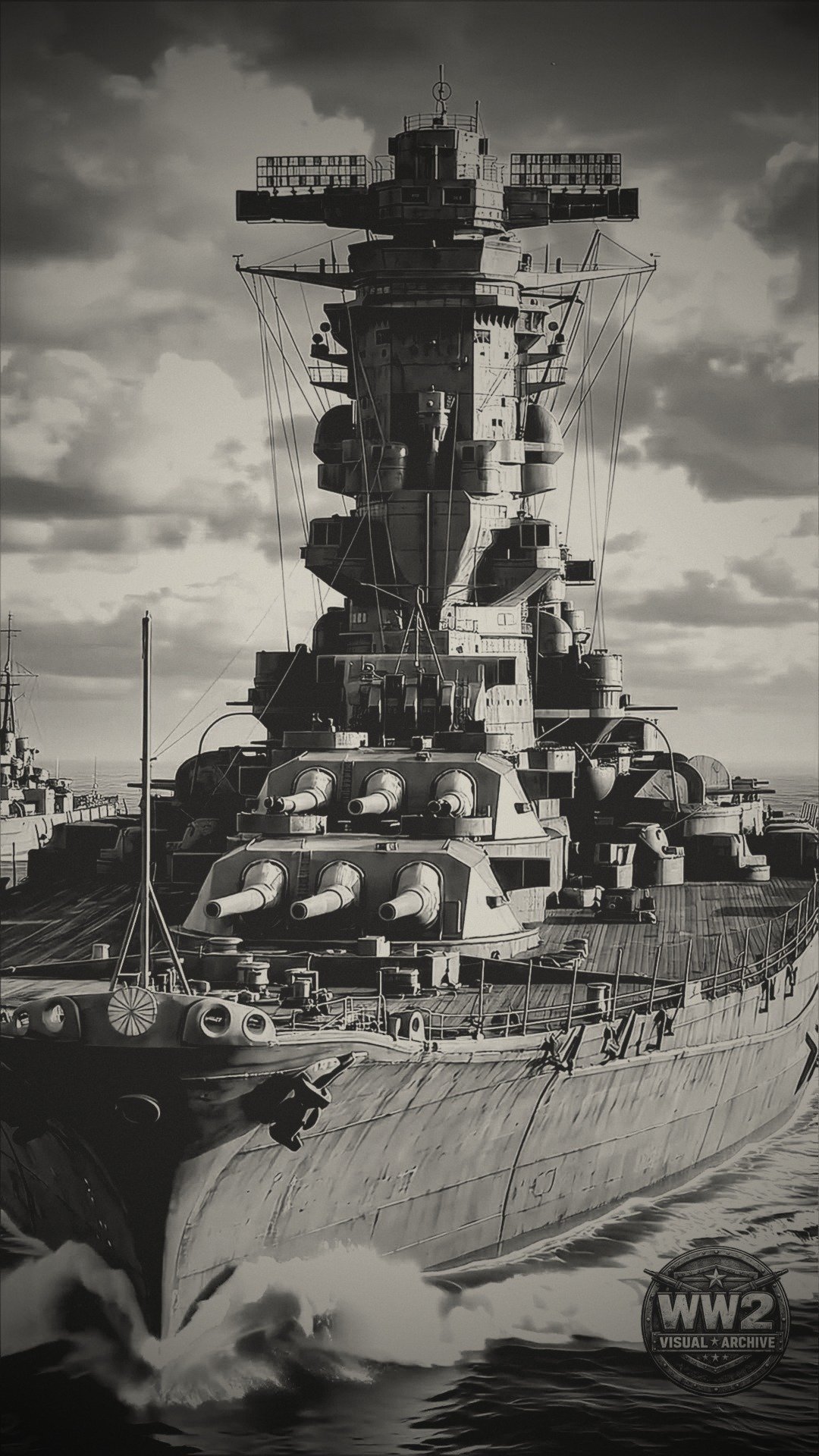
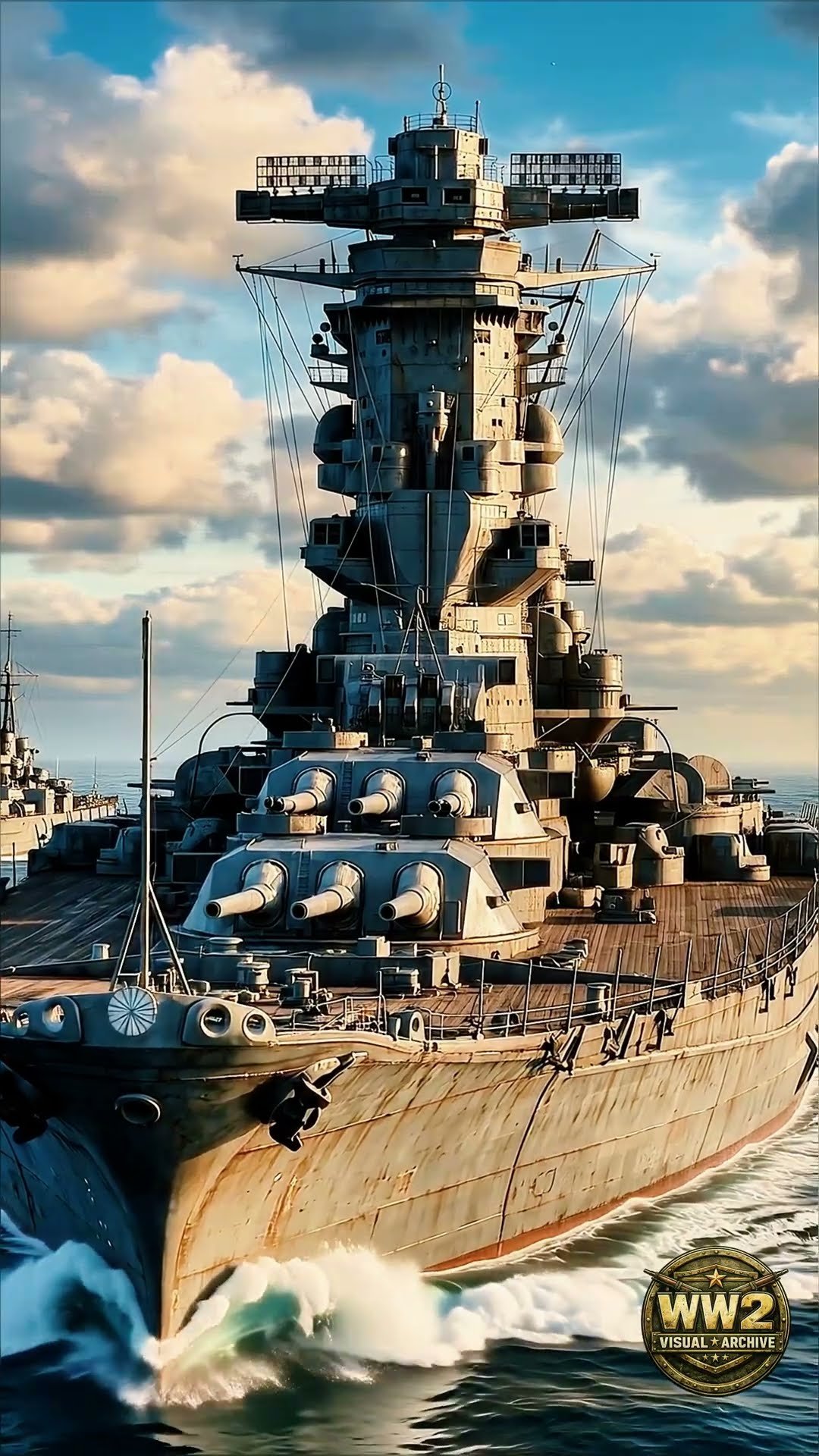
To shield the project from foreign intelligence, the drydock at Kure was deepened, enclosed by high corrugated roof structures, and surrounded by sisal matting. Construction workers were vetted rigorously; only a handful of chief engineers ever saw the complete blueprints. Even within the design division, different teams worked on isolated sections of the hull without knowing the overall dimensions.
TECHNICAL ANATOMY
When completed in December 1941, Yamato and her sister ship Musashi were the heaviest, most heavily gunned battleships ever constructed.
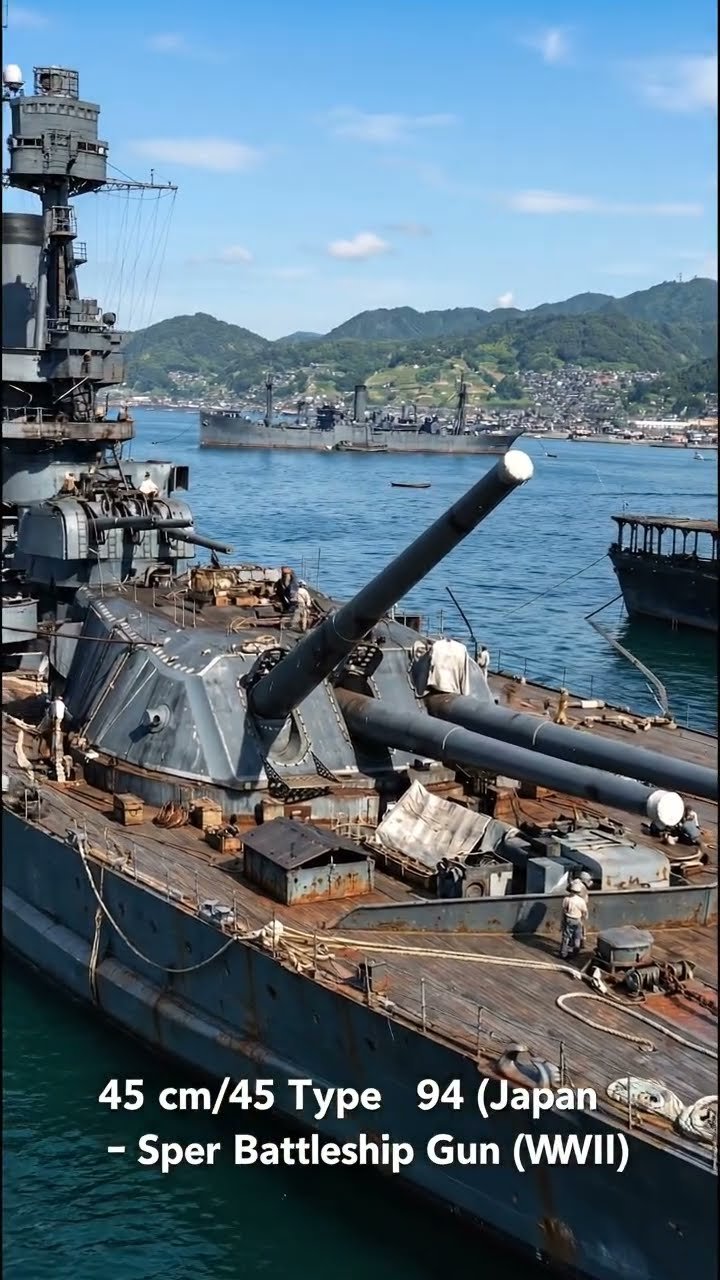
The 46 cm (18.1-Inch) Type 94 Main Battery
To preserve security, Japan officially designated the main armament as the “40 cm/45 Caliber Type 94”, concealing the true 46 cm bore. Each triple turret weighed approximately 2,774 metric tons — heavier than an entire standard fleet destroyer of the era.
Firing the Type 91 armor-piercing shell, weighing 3,219 pounds (1,460 kg), the guns possessed an effective range exceeding 26 miles (42 kilometers). The muzzle blast was so intense that exposed skin within dozens of meters risked severe concussion, and auxiliary open-mount anti-aircraft positions required blast-shield protection to keep gunners from being incapacitated when the main battery fired.
THE OPERATIONAL PARADOX
Despite her peerless combat parameters, Yamato entered service precisely as naval aviation made the classic battleline obsolete.
Commissioned just one week after the attack on Pearl Harbor, she served as Admiral Isoroku Yamamoto’s flagship during the Battle of Midway in June 1942. Stationed hundreds of miles behind the carrier strike force (Kido Butai), her guns never fired a shot at American ships during the engagement.
For much of 1943 and early 1944, Yamato shifted between Truk Lagoon and Kure. Because her four massive steam turbines burned enormous quantities of bunker oil — fuel Japan desperately lacked — the naval high command held her in reserve for a decisive fleet action (Kantai Kessen) that never materialized. The ship was so comparatively luxurious, featuring air-conditioned quarters for officers and advanced galley facilities, that cynical sailors dubbed her the “Hotel Yamato”.
Her guns finally engaged surface targets in October 1944 during the Battle of Leyte Gulf (specifically off Samar). Firing into the escort carriers and destroyers of U.S. Navy Task Unit 77.4.3 (“Taffy 3”), Yamato straddled and damaged several vessels. Yet, confronted with blinding smoke screens, aggressive torpedo charges by outmatched American destroyers, and unrelenting aerial strafing, the Japanese Center Force ultimately withdrew.
Yamato’s Main Gun Type 94 — The Biggest Naval Gun Ever Mounted
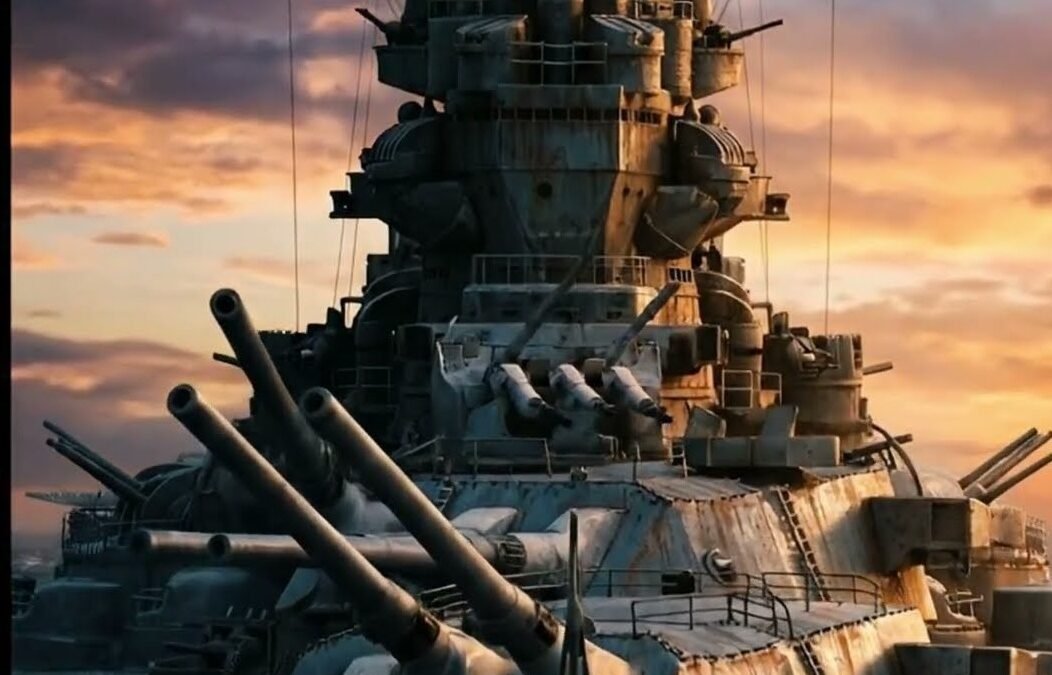
A close look at the 46 cm/45 Type 94 triple turret, restored from archival plates. The barrel count, blast shielding and turret-face geometry were cross-checked against period deck plans before colour was applied.
- Nine 46 cm barrels verified against 1941 deck plans
- 650 mm inclined turret-face armour detail retained
- Blast-shield geometry on the open AA mounts preserved
OPERATION TEN-GO
By April 1945, the Allied invasion of Okinawa threatened the Japanese mainland. With almost no carrier air cover remaining and dwindling fuel reserves, Imperial headquarters devised Operation Ten-Go: a one-way mission.
Yamato, escorted by the light cruiser Yahagi and eight destroyers, was ordered to steam toward Okinawa, beach herself between Hagushi and Yontan, and serve as an unsinkable coastal artillery fortress. Once ammunition was exhausted, the surviving crew was to join local army units in ground combat.
The sortie was intercepted almost immediately after clearing the Bungo Channel by U.S. submarines Threadfin and Hackleback. On the morning of April 7, 1945, north of Okinawa, Vice Admiral Marc Mitscher’s Task Force 58 launched more than 380 strike aircraft in consecutive waves: Curtiss SB2C Helldivers, Douglas SBD Dauntlesses, and Grumman TBF Avengers.
American aviators concentrated their torpedo attacks primarily on Yamato’s port side to induce catastrophic capsizing before counter-flooding could stabilize the list. Over two hours of relentless combat, the ship took at least 11 torpedo hits and up to 8 direct bomb impacts.
At 14:23, listing heavily past 20 degrees to port, Yamato rolled over. Moments later, as the vessel slipped beneath the surface, one of the forward main magazines detonated. The resulting mushroom cloud rose nearly 20,000 feet into the sky, visible over 100 miles away on Kagoshima. Roughly 3,055 officers and men perished; only 276 survivors were rescued.
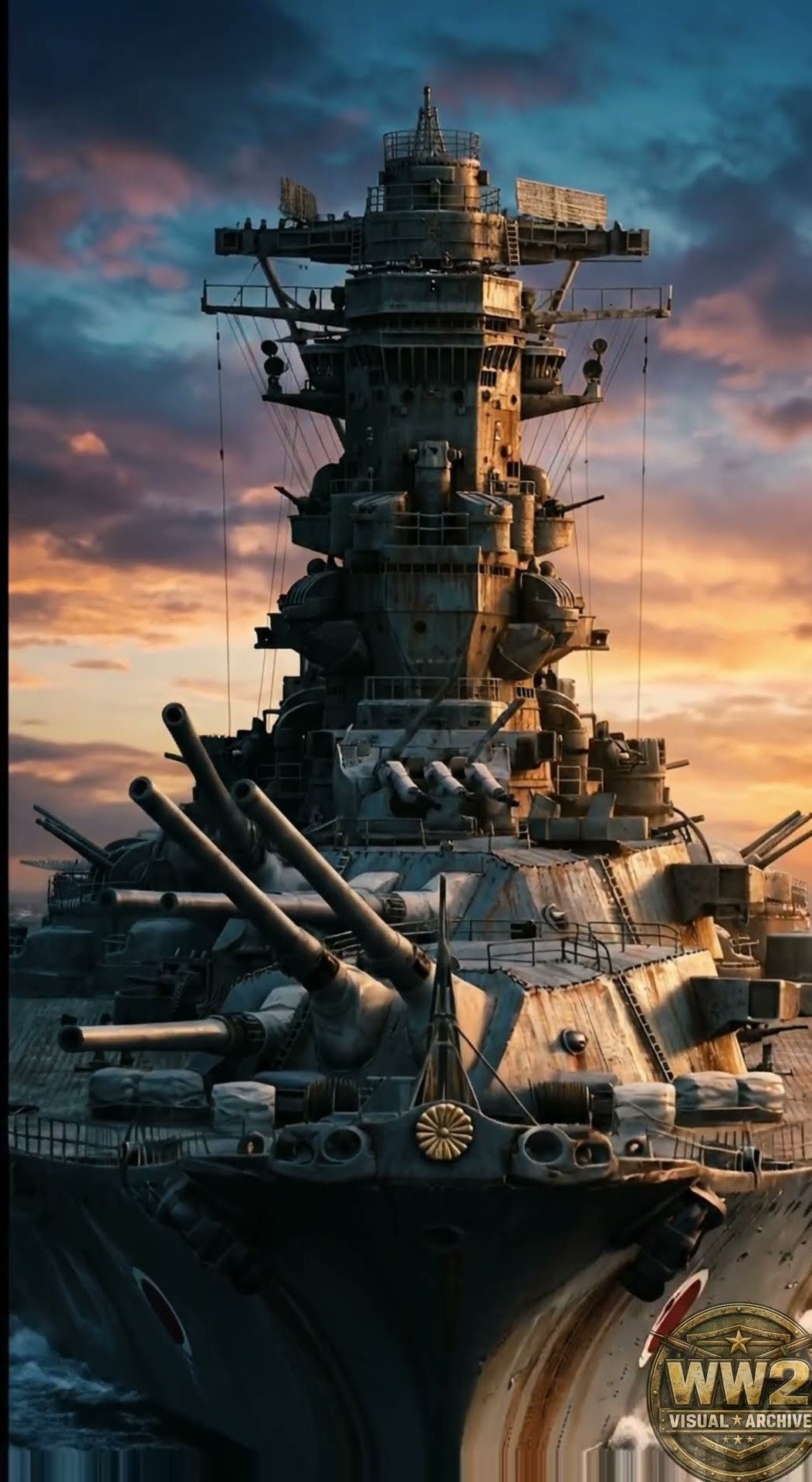
Yamato — The Largest Battleships Ever Built
A short visual record of the largest battleship class ever completed — her scale, her silhouette, and the material reality of 72,000 tons of steel at sea.
- Displacement and dimensions verified against shipwright records
- Silhouette matched to the 1945 anti-aircraft refit
- Deck pigmentation and linoleum blast areas isolated by hand
THE RESTORATION
Restoring archival imagery of Yamato requires navigating both technical challenges and stringent historical accuracy. A generic automated filter often misinterprets weathered metals, sea spray, and lighting conditions.
Our restoration process utilizes a hybrid human-machine workflow designed specifically for World War II naval artifacts.
High-Resolution Archival Ingestion
Original negatives and prints scanned at maximum optical density.
AI Denoising & Edge Preservation
Chemical grain separated from authentic structural geometry.
Historical Palette Calibration
Colour locked to verified IJN arsenal pigment records.
Multi-Layer Neural Color Rendering
Materials, metals and decking rendered as separate layers.
Manual Correction & Luminance Balance
Final artist pass to remove drift and balance exposure.
1. Palette Research & Arsenal Authenticity
The Imperial Japanese Navy did not use a uniform shade of gray. Each major naval yard formulated its own hull coating:
Because Yamato was constructed and predominantly maintained at Kure, our colour calibration locked strictly to verified paint pigment records and physical artifacts recovered from surviving IJN vessels of the period.
2. Decking Materials & Details
A frequent error in amateur colorization is rendering the main deck in flat wood tones. While the central portions were clad in native Hinoki (cypress) planks, high-temperature blast areas around the aft aircraft handling facilities and secondary guns featured dark linoleum plating secured with brass strips. We manually isolated these sections to reflect the exact brass and oxidized linoleum finishes.
3. AI-Assisted Frame Reconstruction
Archival film negative degradation often introduces film grain clumps, motion blur, and emulsion tears. Using custom optical-flow and detail-preserving neural networks:
- We separated authentic structural geometry (rivet lines, radar antennae, rangefinder lenses) from chemical negative grain.
- Frames were upscaled to native 4K resolution while avoiding the smoothed “wax-figure” artifacts common to aggressive commercial AI filters.
- Anti-aircraft barrel counts on the 1945 configuration (which had grown to a massive array of 162 Type 96 25 mm autocannons) were cross-checked against deck plan blueprints to ensure small details were preserved accurately.
THE LEGACY OF THE LAST LEVIATHAN
The wreck of Yamato was located in 1985 in the East China Sea, resting at a depth of 1,120 feet (340 meters) in two principal sections. Decades of underwater surveys by submersibles have confirmed the violent mechanics of her final moments: the shattered hull, overturned barbettes, and the sprawling debris field of a ship designed for a tactical reality that had already vanished.
Yamato stands as both an engineering marvel and a solemn monument to the human cost of industrialized naval warfare. By restoring the photographic record in true-to-life colour, our goal is not to romanticize her mission, but to strip away the distance imposed by faded black-and-white media — allowing modern viewers to witness the scale, material reality, and tragedy of the Pacific War with historical clarity.
FREQUENTLY ASKED QUESTIONS
For more archival colorizations and historical engineering analyses of World War II warships, aircraft, and armor, explore our visual archive series — over 1,100 restorations and counting.