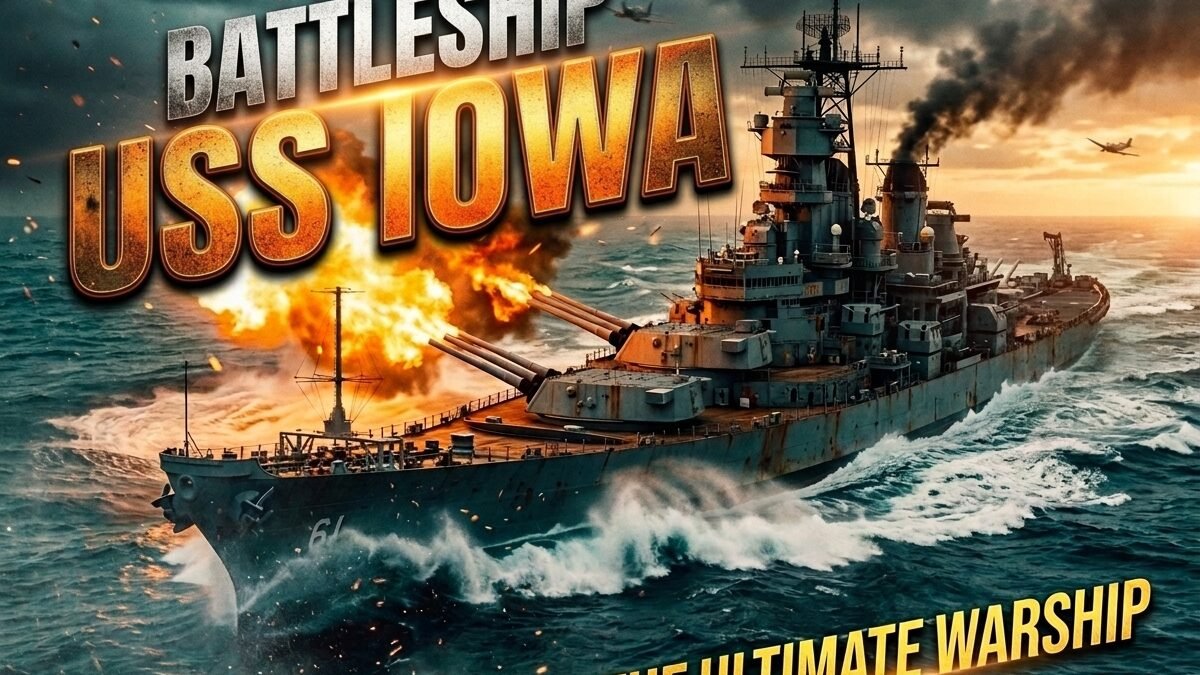
Conceived in May 1938 after Imperial Japan declined to sign the Second London Naval Treaty, the Iowa-class fast battleships invoked the treaty’s Escalation Clause, raising standard displacement limits from 35,000 tons to 45,000 tons. Rather than simply adding thicker armor to the 27-knot South Dakota (BB-57) design, the U.S. Navy General Board and Preliminary Design Branch engineered a 33-knot fast wing capital ship capable of hunting down Imperial Japanese Navy Kongō-class fast battleships and escorting Essex-class fleet aircraft carriers in Task Force 38 and Task Force 58.
To squeeze 212,000 shaft horsepower—a 63% power increase over South Dakota—through the 110-foot locks of the Panama Canal, naval architects stretched the hull to 887 feet 3 inches while restricting the beam to strictly 108 feet 2 inches. The resulting length-to-beam ratio of 8.19:1 and characteristic bulbous bow produced the fastest dreadnoughts ever commissioned, reaching up to 35.2 knots during light-displacement trials.
Reel 01: USS Iowa at 33 Knots & FDR’s 1943 Tehran Mission

Reel 02: Battle Line: Iowa, New Jersey, Missouri & Wisconsin in 4K

Reel 03: Fast Carrier Escort Doctrine

⚓ Interactive Tool: Simulator 01: Six-Hull Fleet Registry & Cold War Refit Toggle
Due to a critical bureaucratic communication failure between the Bureau of Construction and Repair (BuC&R) and the Bureau of Ordnance (BuOrd) during preliminary design, the Iowa class’s turret barbette diameters were drawn too narrow for the bloated 16-inch/50 Mark 2 gun originally stockpiled from the canceled 1920s South Dakota class. Forced to design an entirely new, lightweight weapon to fit inside a 37-foot 3-inch barbette, BuOrd engineers created a masterpiece: the 16-inch/50 caliber (406mm) Mark 7 gun.
Weighing 239,156 pounds (108.5 metric tons) without its breech and measuring 66 feet 8 inches in length, the Mark 7 fired the 2,700-pound (1,224.7 kg) Armor-Piercing Mark 8 Super-Heavy projectile using six 110-pound silk bags of SPD nitrocellulose propellant at a muzzle velocity of 2,500 feet per second (762 m/s). Directed by the analog electro-mechanical Mark 8 Rangekeeper and Mark 8 / Mark 13 fire-control radars, an Iowa-class battleship could track and straddle targets moving at 30+ knots in zero-visibility night combat or blinding Pacific squalls out to 42,345 yards (24.06 statute miles).
Reel 04: Overhead 16-Inch Broadside Shockwave

Reel 05: Triple Turret Roof & Coincidence Optics

Reel 06: 66-Foot Barrel Elevation Mechanics
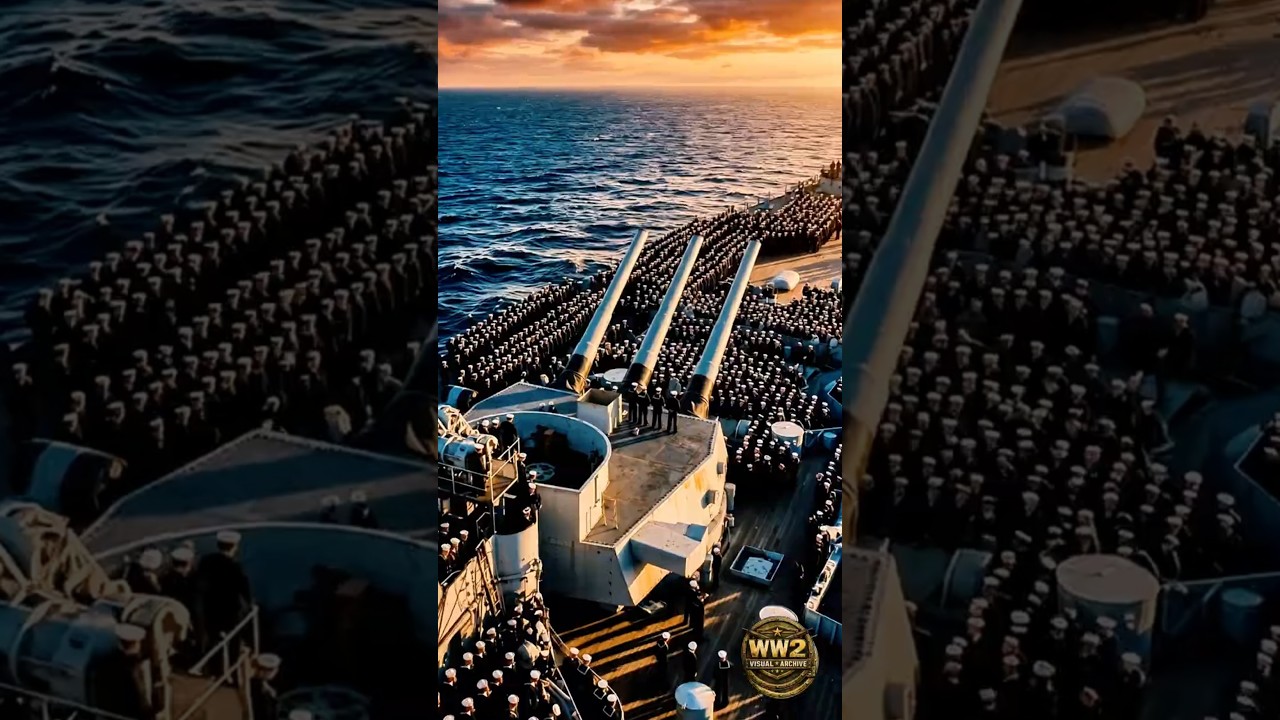
Reel 07: Terminal Kinetic Energy & Deck Plunging Fire

🎯 Simulator 02: 16″/50 Mark 7 Armor Penetration Calculator
⚙️ Simulator 03: 1,708-Ton Triple Turret 5-Deck Cutaway
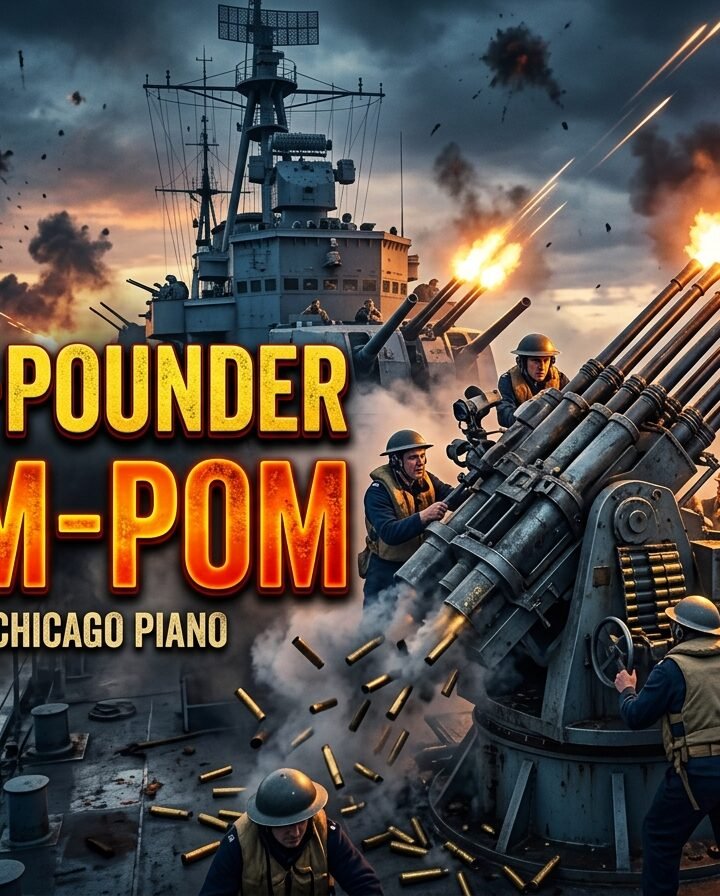
Protected by a 17.0-inch Class B homogeneous steel faceplate mounted on a 2.5-inch STS backing plate (19.5 inches total) inclined at 36 degrees, plus a 7.25-inch roof. Houses the three independent Mark 7 gun slides, chain rammers (loading at a fixed +5.0° angle), and the 46-foot stereoscopic/coincidence Mark 52 rangefinder.
On February 17, 1944, during Operation Hailstone off Truk Atoll, USS Iowa (BB-61) and USS New Jersey (BB-62) executed Task Group 50.9’s surface sweep around the lagoon. Engaging the fleeing Japanese destroyer Nowaki at the unprecedented ranges of 34,000 to 39,000 yards (22.1 miles), Iowa straddled the 35-knot destroyer in the longest-range gunfire engagement in naval history.
Across four wars, the four completed sisters forged an unmatched record: USS New Jersey (BB-62) earned 19 Battle Stars across WWII, Korea, Vietnam, and Lebanon; USS Missouri (BB-63) hosted the Allied Instrument of Surrender in Tokyo Bay on September 2, 1945; and in January–February 1991, Missouri and USS Wisconsin (BB-64) launched 40 BGM-109 Tomahawk cruise missiles and fired over 1,100 rounds of 16-inch ordnance during Operation Desert Storm.
Reel 08: USS New Jersey (BB-62) — 19 Battle Stars
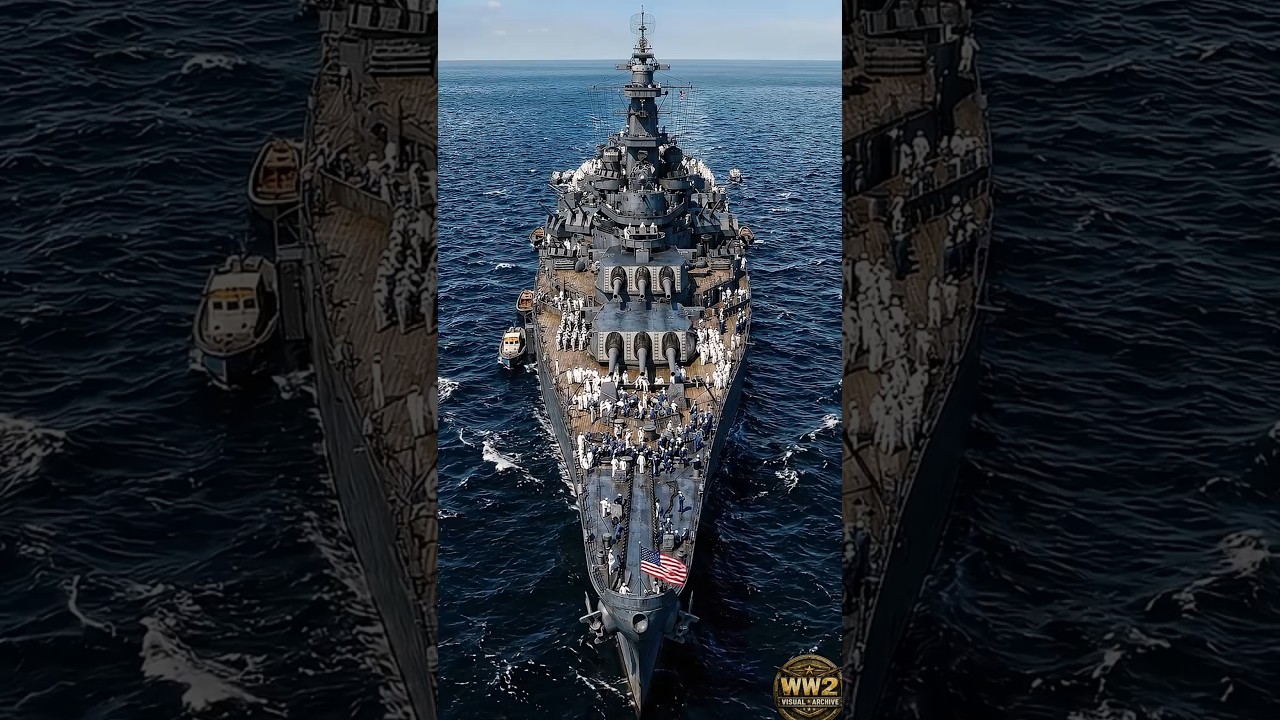
Reel 09: Pier-Level Turret Face & 5″/38 Secondary Batteries
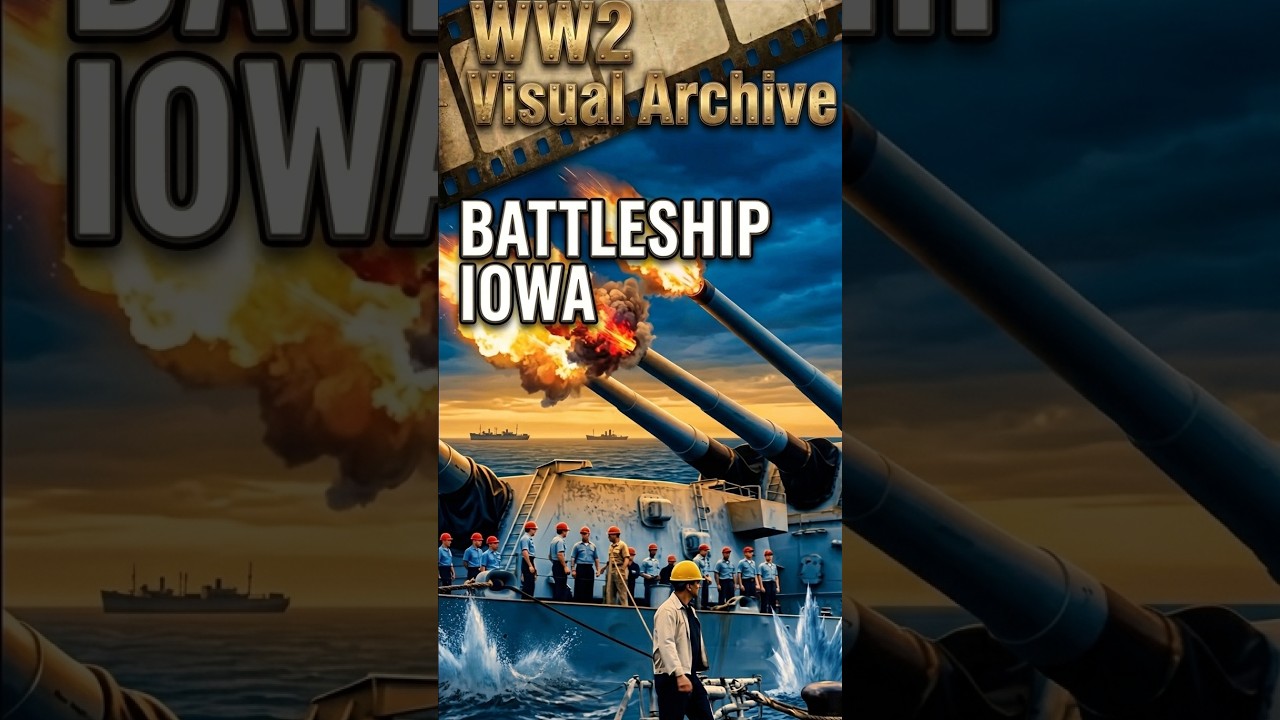
Reel 10: USS Missouri (BB-63) Aerial Maneuvers

Reel 11: USS Wisconsin (BB-64) Dockside Maneuvering

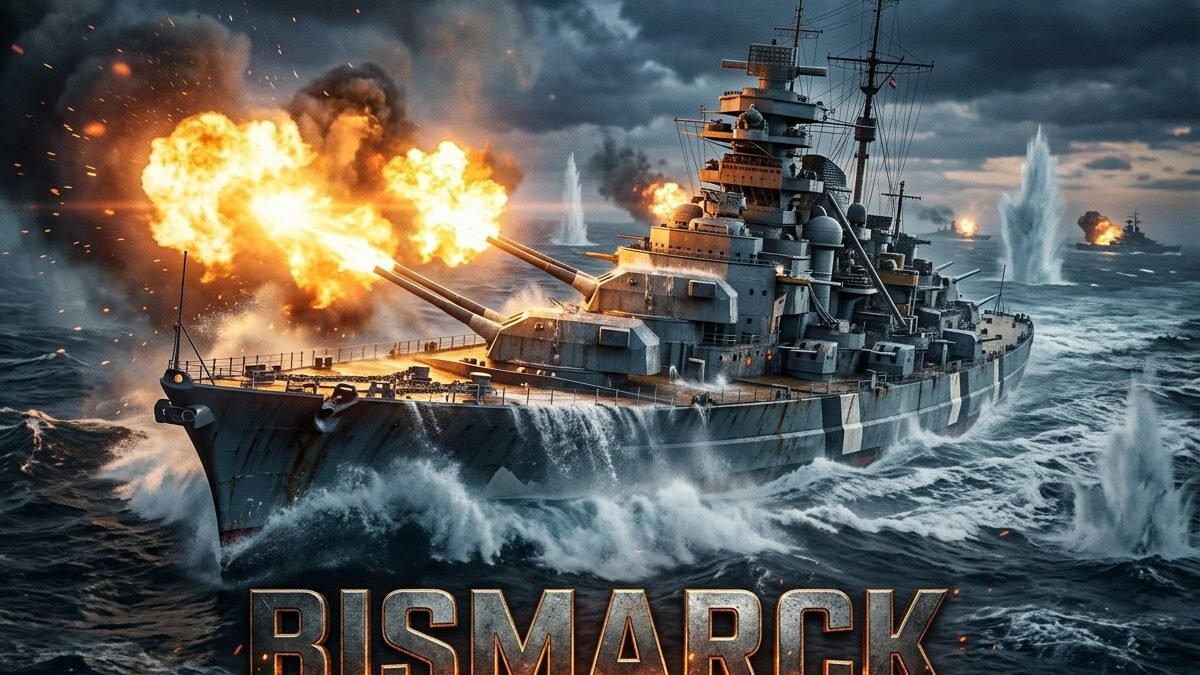
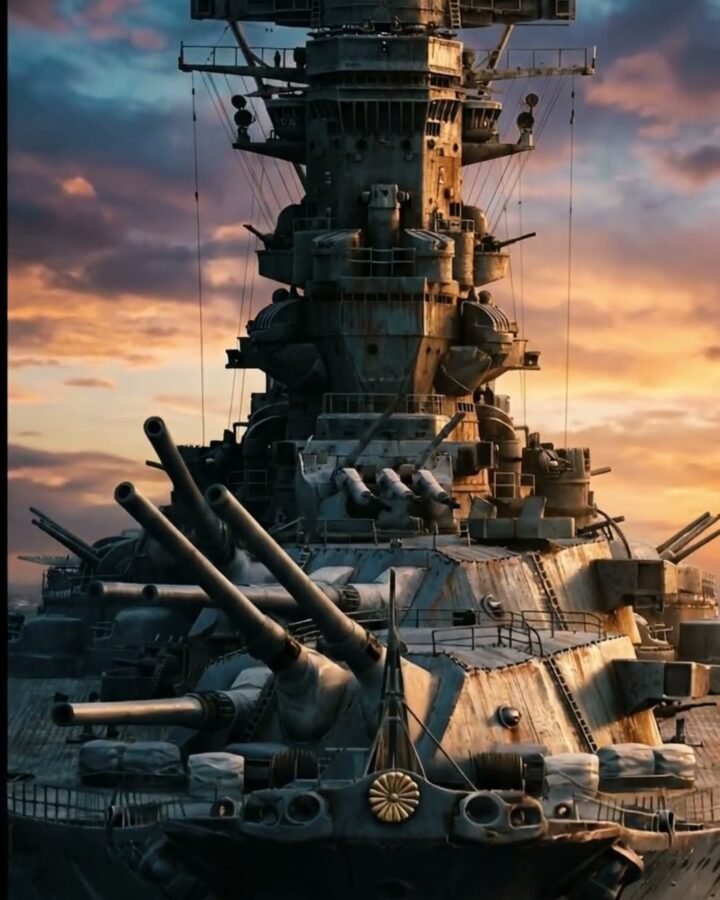
While Imperial Japan’s 72,809-ton IJN Yamato carried larger 18.1-inch (460mm) guns and thicker face-hardened armor, the Iowa class held decisive advantages in three areas that defined modern naval combat: a 6-knot speed superiority (33.0 vs. 27.0 knots) allowing Iowa to dictate engagement range, superior U.S. Class A/B metallurgy and AP Mark 8 cap design yielding virtually identical armor penetration at 20,000+ yards, and blind-fire centimeter-wavelength radar fire control (Mark 8 radar + Mark 8 Rangekeeper) capable of hitting first through darkness, smoke, or horizon haze.
| Tactical Parameter | USS Iowa (BB-61) | IJN Yamato | KM Bismarck | HMS Vanguard |
|---|---|---|---|---|
| Full-Load Displacement | 57,540 Long Tons | 71,659 Long Tons (72,809 MT) | 50,300 Long Tons | 51,420 Long Tons |
| Main Battery & Shell Wt | 9× 16″/50 Mk 7 (2,700 lb AP) | 9× 18.1″/45 Type 94 (3,219 lb AP) | 8× 15″/52 SK C/34 (1,764 lb AP) | 8× 15″/42 Mk I/N (1,938 lb AP) |
| Belt Pen @ 20,000 Yds | 20.04 in (509 mm) | 19.45 in (494 mm) | 16.49 in (419 mm) | 14.40 in (366 mm) |
| Max Speed & Power | 33.0 kts (212,000 shp) | 27.0 kts (150,000 shp) | 30.0 kts (150,170 shp) | 30.0 kts (130,000 shp) |
| Primary Fire Control Radar | Mk 8 / Mk 13 Centimetric Radar | Type 22 (Optical Primary) | FuMO 23 Ranging Only | Type 274 Centimetric Radar |
Reel 12: USS Iowa vs. IJN Yamato Tactical Analysis

Reel 13: ABSD-2 Floating Drydock Emergency Repairs (Manus 1944)

Reel 14: Shore Bombardment off Koje, Korea (1952)

🕹️ Interactive Tool: Simulator 04: Captain’s CIC Tactical Recognition Quiz
SCORE: 0 / 4Q1: During multi-ship gunfire missions, which colored projectile spotting dye was assigned specifically to USS Iowa (BB-61) so spotters could distinguish her 16-inch shell splashes?
Did you or a family member serve aboard USS Iowa (BB-61), New Jersey (BB-62), Missouri (BB-63), or Wisconsin (BB-64), or do you have primary-source gunnery logs and technical observations to contribute? Submit your dispatch to the permanent archive record below.