USS Arizona (BB-39): Standard-Type Naval Architecture, The 800-kg Bomb Catastrophe & Sacred Memorial Archaeology
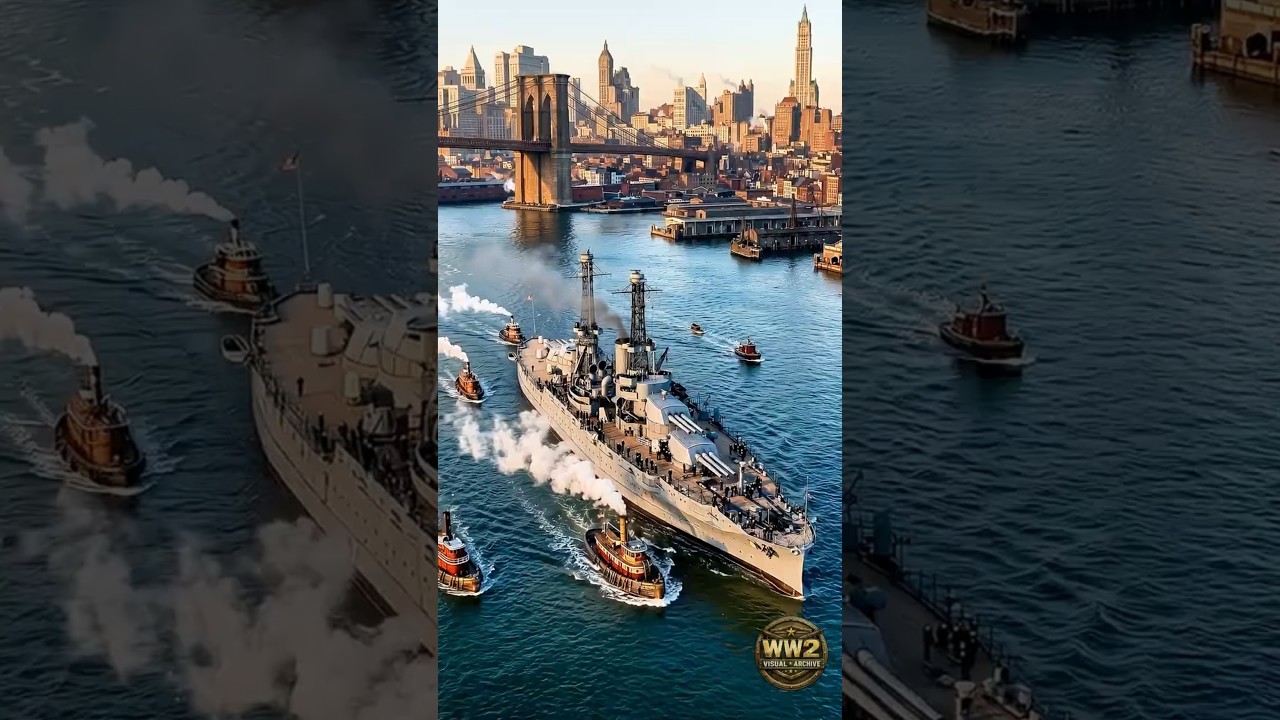
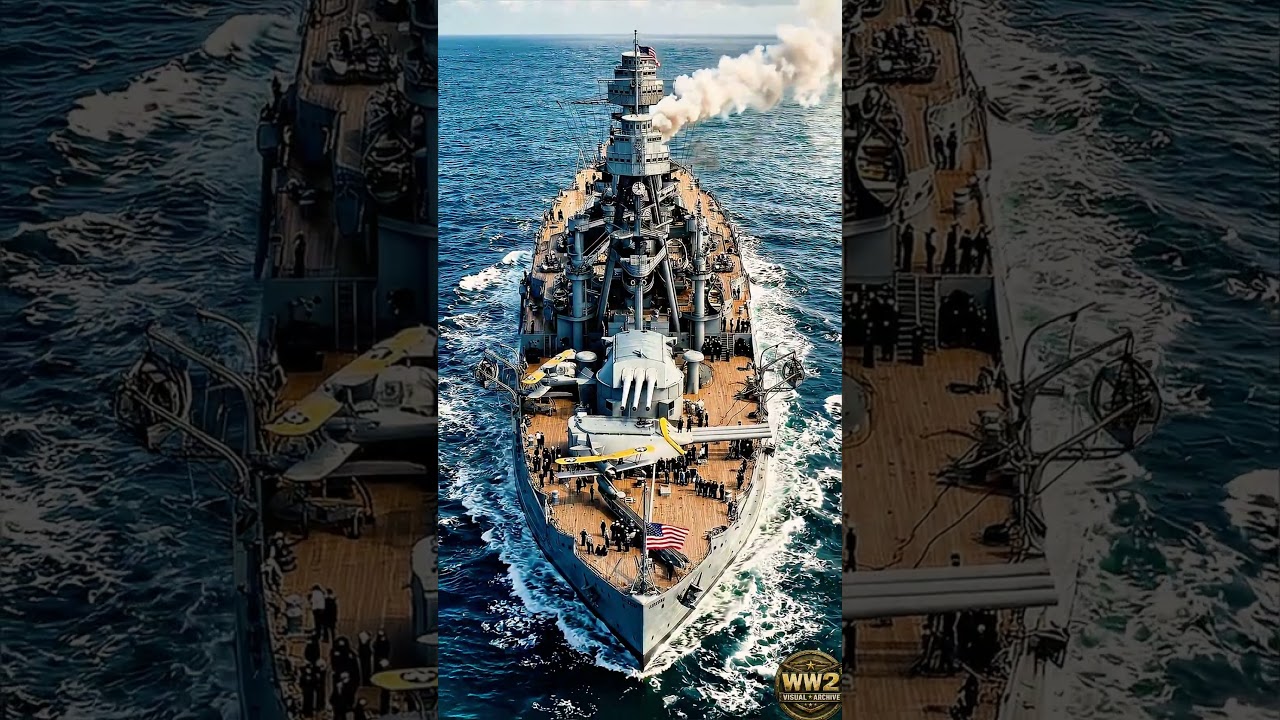
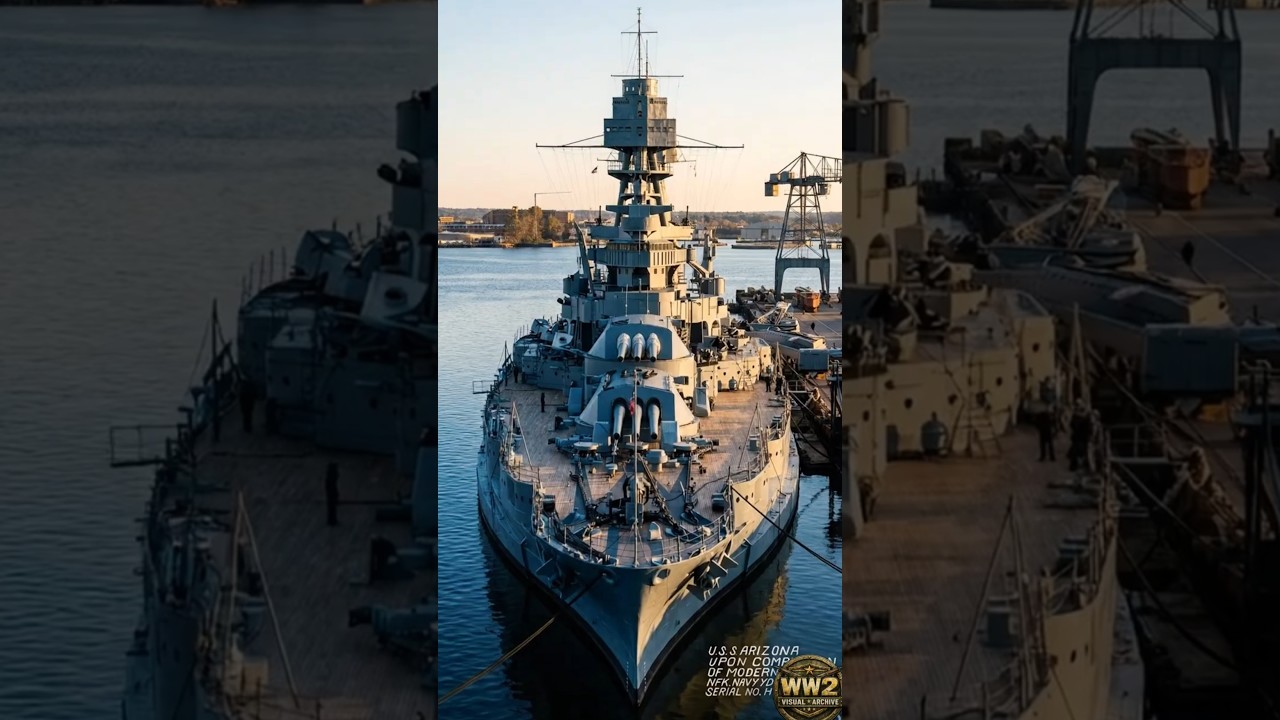
Laid down at the Brooklyn Navy Yard in March 1914 and commissioned amidst the First World War in October 1916, USS Arizona (BB-39) represented the technological zenith of the United States Navy’s “Standard-type” battleship doctrine. Designed with an all-or-nothing armor citadel, twelve 14-inch/45 caliber Mark 8 naval rifles in four triple turrets, and oil-fired water-tube boilers driving four massive Parsons geared turbine screws, she formed the core of the Pacific Fleet’s battle line moored along Ford Island’s Battleship Row on the fateful morning of 7 December 1941.
The Modified Nagato Shell, Forward Powder Magazine Deflagration, and 1,177 Sacred Souls
At 08:06, four minutes into the second wave of the Imperial Japanese Navy raid, a Nakajima B5N2 “Kate” torpedo-bomber operating in high-level horizontal bombing mode dropped a specially modified 797-kilogram (1,757 lb) armor-piercing bomb—machined directly from a 410mm (16.1-inch) Nagato-class naval shell. Released from 3,200 meters, the bomb struck Arizona’s forward deck abreast Turret II, punched through three armored decks, and penetrated into the black powder and smokeless cordite magazines. The resulting cataclysmic detonation ripped the forward hull apart, collapsed the forward tripod mast and conning tower, and instantly claimed the lives of 1,177 officers and sailors—the greatest single-ship loss of life in American naval history. Today, the sunken dreadnought remains in commissioned commission as a sacred national memorial, slowly releasing her legendary “Black Tears” of oil into the waters of Pearl Harbor.
Visual Archaeology: Battleship Row, The 7 December Explosion & The Sunken Memorial
Explore restored archival film negatives, National Park Service Submerged Resources Center sonar scans, and declassified naval photography. From the pre-war fleet maneuvers in the Hawaiian Operating Area to the cataclysmic 08:06 forward magazine detonation and the solemn modern underwater shrine beneath the Alfred Preis Memorial bridge.
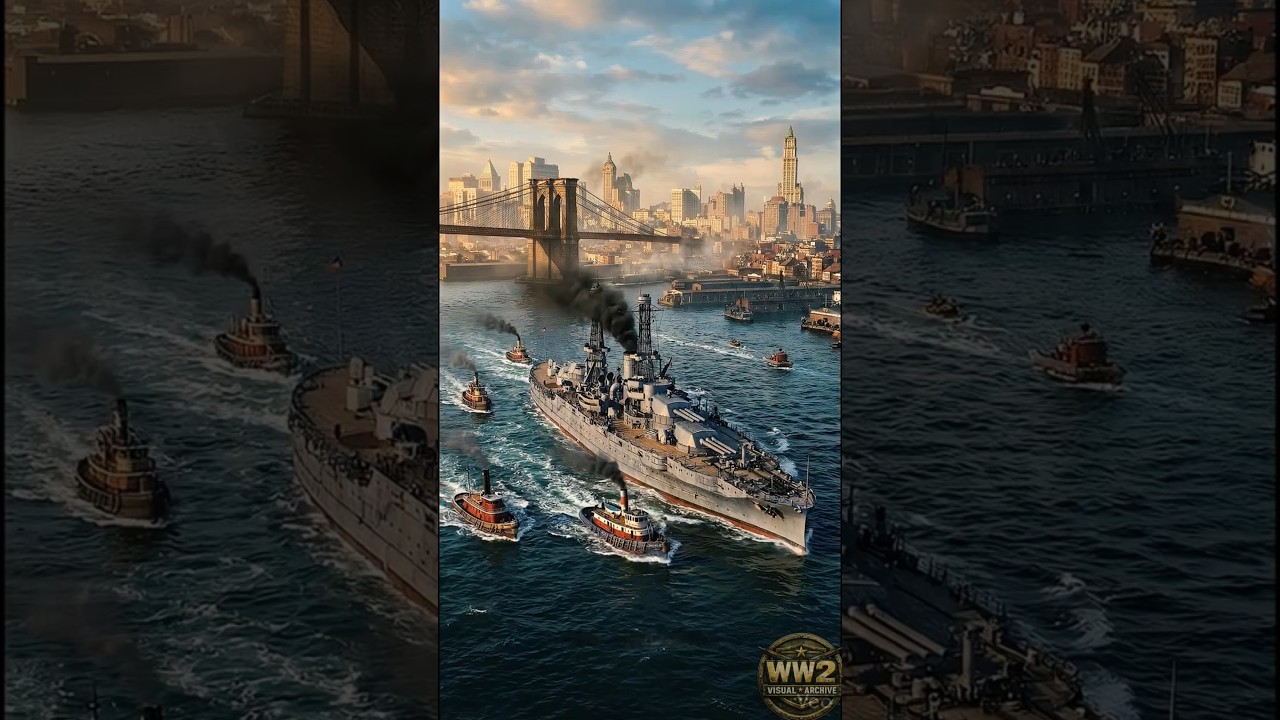
 COMMISSIONING TRIALS — NEW YORK HARBOR (OCTOBER 1916)
Digitally restored from high-resolution glass plate negatives and modern NPS underwater laser telemetry scans, documenting the evolution from Pennsylvania-class dreadnought flagship to America’s most revered submerged war grave.
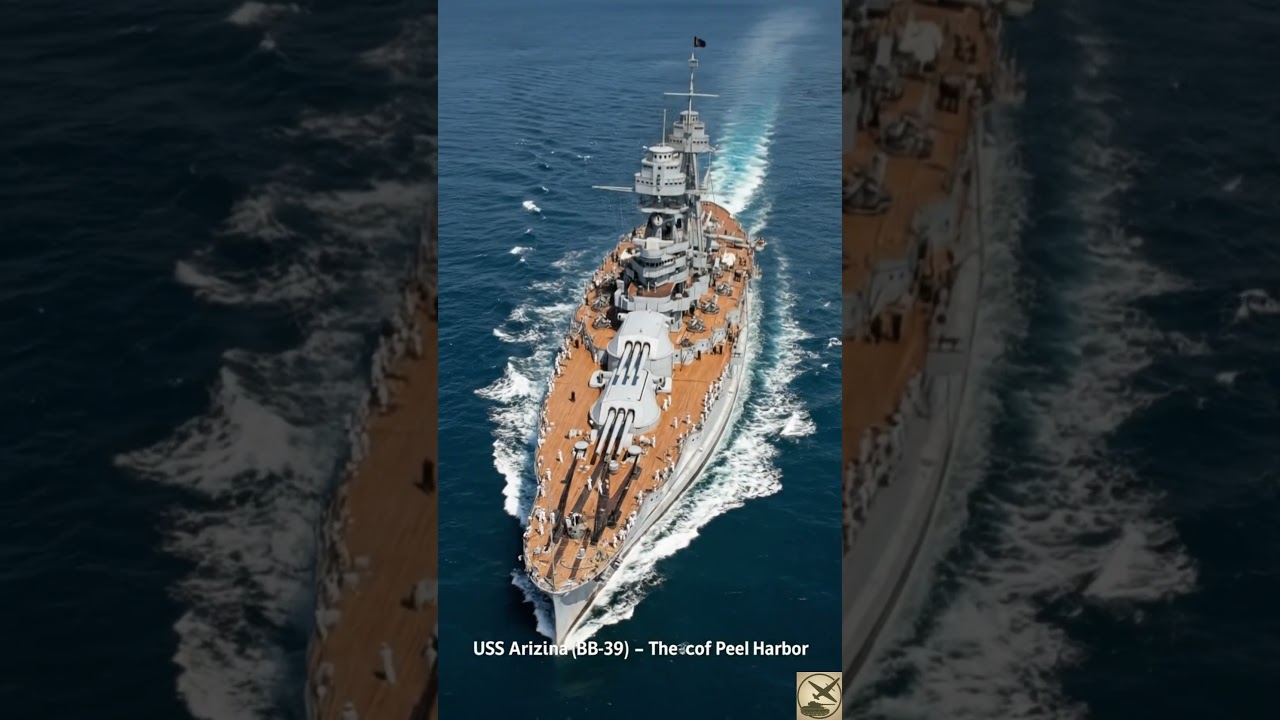
Battleship Anatomy: The All-or-Nothing Armor Citadel & Magazine Vulnerability
Interrogate the internal structural compartments of USS Arizona. Designed under the revolutionary US Navy “All-or-Nothing” armor doctrine, heavy Class A Krupp cemented armor enclosed only the vital machinery and ammunition magazines, leaving the unarmored bow and stern to absorb secondary splinter damage.
Armor Metallurgy & 14-Inch Gunnery: The All-or-Nothing Citadel Reference
USS Arizona was designed under the revolutionary “All-or-Nothing” armor doctrine pioneered by the US Navy Bureau of Construction and Repair with the preceding Nevada class. In contrast to European warships that dissipated armor weight across thin upper belts and casemates, American dreadnoughts concentrated maximum armor solely over the ship’s vital core—the propulsion machinery, boiler uptakes, steering gear, and powder magazines—while leaving the bow and stern completely unarmored.
| Structural Subsystem | Armor Type & Composition | Thickness (Inches / mm) | Ballistic Protection Role |
|---|---|---|---|
| Main Waterline Belt | Class A Krupp Cemented (Face-Hardened) | 13.5″ (343 mm) tapering to 8.0″ (203 mm) | Shatters direct horizontal naval shell fire across machinery and magazines |
| Transverse Bulkheads | Class A Krupp Cemented | 13.0″ forward / 8.0″ aft (330 / 203 mm) | Seals the armored citadel against longitudinal raking shells |
| Turret Face Plates | Class A Krupp Cemented (Sloped 30°) | 18.0″ (457 mm) | Heaviest single armor forgings on the ship; deflects direct 14″ to 16″ hits |
| Turret Sides & Rear | Class B Homogeneous Steel | 9.0″ to 10.0″ sides / 9.0″ rear (228–254 mm) | Counterweight protection and containment of interior gun blast spall |
| Barbettes (Above Deck) | Class A Krupp Cemented | 13.0″ (330 mm) | Shields the rotating turret stalk, ammunition hoists, and training gear |
| Armored Conning Tower | Class A Krupp Cemented | 16.0″ sides / 8.0″ roof (406 / 203 mm) | Armored navigation station, steering wheels, and combat periscopes |
| Upper Armored Deck | Special Treatment Steel (STS) | 1.75″ (44 mm) | Decapping plate designed to strip armor-piercing caps off incoming plunging bombs |
| Second Deck (Main Armor) | Class B / STS Homogeneous Plate | 1.50″ to 3.00″ (38–76 mm) | Primary horizontal protective barrier sealing machinery and powder stores |
| Anti-Torpedo Blisters | Multi-layered Liquid/Void Compartments | 4.50 ft (1.37 m) bulge depth each flank | Absorbs underwater torpedo blast gas overpressure (1931 refit) |
14-Inch/45 Caliber Mark 8 Naval Gun Gunnery Ballistics
Arizona’s primary striking power was concentrated in twelve 14-inch/45 caliber Mark 8 naval rifles mounted in four triple turrets (Turrets I and II forward, Turrets III and IV aft) arranged in super-firing pairs. Manufactured from nickel-steel forgings with shrunk-on jackets, these guns could elevate to 30 degrees following the 1931 modernization, extending their effective gunnery reach to over 19 miles.
| Ballistic Attribute | Technical Specification | Operational Impact & Combat Performance |
|---|---|---|
| Bore Diameter & Length | 14.0 Inches (355.6 mm) // 45 Calibers (630 in / 16.0 m) | Optimized rifling pitch delivering uniform spin stabilization and reduced barrel erosion |
| Muzzle Velocity | 2,600 feet/sec (792 m/s) with full service charge | Generates 132,000 foot-tons of muzzle kinetic energy per barrel fired |
| Armor-Piercing Shell (AP) | 1,400 lbs (635 kg) Mark 16 Armor-Piercing Projectile | Fitted with hardened armor-piercing cap and explosive D (ammonium picrate) burster |
| High-Capacity Shell (HC) | 1,275 lbs (578 kg) Mark 19 Shore Bombardment Projectile | Thin-cased fragmentation shell packed with high explosives for surface and shore targets |
| Propellant Powder Charge | 420 lbs (190.5 kg) Nitrocellulose Smokeless Powder | Divided into four silk bags (105 lbs each) transferred by electric hoists to the gun breeches |
| Maximum Gun Elevation | +30.0 Degrees (increased from original +15.0° in 1931) | Elevated firing range dramatically from 21,000 yards to 34,300 yards (31.4 km / 19.5 mi) |
| Rate of Fire & Broadside | 1.5 to 2.0 rounds/minute per barrel (up to 24 rds/min) | Full 12-gun broadside unleashed 16,800 lbs (8.4 short tons) of armor-piercing steel per salvo |
Anatomy of the Catastrophe: The 800-kg Modified Nagato Shell & Powder Magazine Blast
For decades following the attack on Pearl Harbor, popular myth held that a Japanese torpedo or a lucky glide-bomb caused the destruction of USS Arizona. Modern metallurgical and archival forensics, however, reveal a far more calculating engineering reality: the weapon that annihilated BB-39 was not a conventional aerial bomb, but a converted 16.1-inch armor-piercing naval cannon projectile specifically adapted to defeat heavy deck armor.

The Type 99 No. 80 Mark 5: Machining Heavy Naval Artillery for the Air
Prior to December 1941, Imperial Japanese Navy ordnance engineers recognized that standard general-purpose aerial bombs could not penetrate the multi-layered armor decks of American dreadnoughts. Dive-bombing with 250-kg bombs could wreck superstructures, but would shatter harmlessly on main armored decks. Under the direction of Captain (later Rear Admiral) Kenshiro Oki, the Naval Technical Department devised a radical solution: repurpose surplus 410mm (16.1-inch) Type 91 armor-piercing naval artillery shells originally forged for the battleships Nagato and Mutsu.
- Metallurgy & Casing: The heavy naval shell body was turned down on lathes to shave weight, fitting four welded steel tail fins and a streamlined aerodynamic nose cap. The finished bomb weighed 797 kilograms (1,757 lbs), of which 593 kilograms was hardened nickel-chrome armor-piercing steel.
- Explosive Core & Delay Fuse: Unlike blast bombs packed with light explosives, the Type 99 carried only 22.8 kilograms (50.3 lbs) of cast Type 91 explosive (picric acid / trinitrophenol). The base of the projectile was threaded with dual Type 99 delay-action fuses set for 0.2 seconds—designed specifically to resist the immense mechanical shock of deck penetration and detonate only after reaching deep interior magazines.
- Terminal Kinetic Velocity: To achieve the kinetic energy required to punch through three armored decks, Nakajima B5N2 “Kate” horizontal bombers were ordered to release at a mandatory minimum altitude of 3,000 to 3,200 meters (10,000+ ft). By the time the shell struck Arizona, terminal gravity acceleration propelled it to over 260 meters per second (580 mph / 936 km/h).
Reconstruction of the Four Bomb Hits on Arizona
Careful analysis of damage logs, salvage surveys, and eyewitness testimony confirms that Arizona was struck by four individual aerial bombs during the attack:
- Hit #1 (Stern Outboard): Struck the quarterdeck near frame 135, penetrating through the captain’s pantry and mess spaces before exiting through the side plating into the water between Arizona and repair ship Vestal.
- Hit #2 (Port Boat Deck): Detonated abreast of the smokestack near frame 88, wrecking port 5-inch ready-service lockers, fracturing the boiler uptakes, and igniting secondary fires on the galley deck.
- Hit #3 (Quarterdeck Port): Landed near Turret IV at frame 110, penetrating the upper deck and deflecting off the heavy 13-inch barbette armor ring, exploding inside the living spaces with localized fragmentation damage.
- Hit #4 (The Fatal Penetration): Struck at 08:06 near frame 119, approximately 40 feet forward of Turret II on the starboard side. Slicing through the 0.625-inch weather deck, the 1.75-inch STS upper deck, and the 1.5-inch second deck, it entered into black powder saluting locker A-515-M and adjacent 14-inch powder handling room A-310-M.
Chemical & Gas Dynamic Mechanics of the Magazine Deflagration
When the bomb’s 22.8-kg picric acid core detonated in black powder room A-515-M, the intense shockwave and flame ignited several hundred pounds of granular black powder stored in metal cans. Black powder burns with an explosive velocity that instantly flashed into the adjacent main 14-inch powder magazines, which held over 1,000 silk bags containing more than 100,000 pounds of smokeless nitrocellulose propellant.
Unlike high explosives that detonate with a supersonic shock wave, smokeless powder deflagrates, rapidly generating over 7 million liters of superheated gas. Trapped within the rigid, unyielding Class A armor citadel, this astronomical gas overpressure had no path of escape. The expanding gas ripped bulkheads apart, bulged the armored sides of the hull outward by more than ten feet, lifted the massive 1,200-ton Turret II several feet off its roller bearings, and tore the forward 150 feet of the ship wide open. A colossal column of flame and black smoke soared 1,000 feet into the Hawaiian sky, and within nine minutes, the forward hull had settled into the harbor mud.
Tactical Defense Lab: 800-kg Bomb Ballistics vs. 5-Inch Deck Armor
Simulate the physics of the Pearl Harbor attack. Evaluate how bomb release altitude, projectile terminal velocity, armor-piercing cap metallurgy, and anti-aircraft fire rates determined the fate of Battleship Row.
Altitude dictates gravity acceleration and terminal kinetic energy against deck armor.
Hardened armor-piercing cap vs. thin blast casing vs. underwater blast acoustic pressure.
Readiness condition of ammunition ready-boxes, fire control directors, and lookouts.
The Standard-Type Dreadnought: Brooklyn Navy Yard to the 1931 Modernization
Authorized by Congress in 1913, the Pennsylvania class represented the maturation of the US Navy General Board’s doctrine of “Standard-type” battleships. Conceived as a homogenous tactical fighting fleet, all Standard-type dreadnoughts (the Nevada, Pennsylvania, New Mexico, Tennessee, and Colorado classes) were engineered with uniform tactical characteristics: a top speed of 21 knots, a tight tactical turning radius of 700 yards, all-oil fuel propulsion, and the revolutionary “All-or-Nothing” armored citadel.
Construction and World War I Service
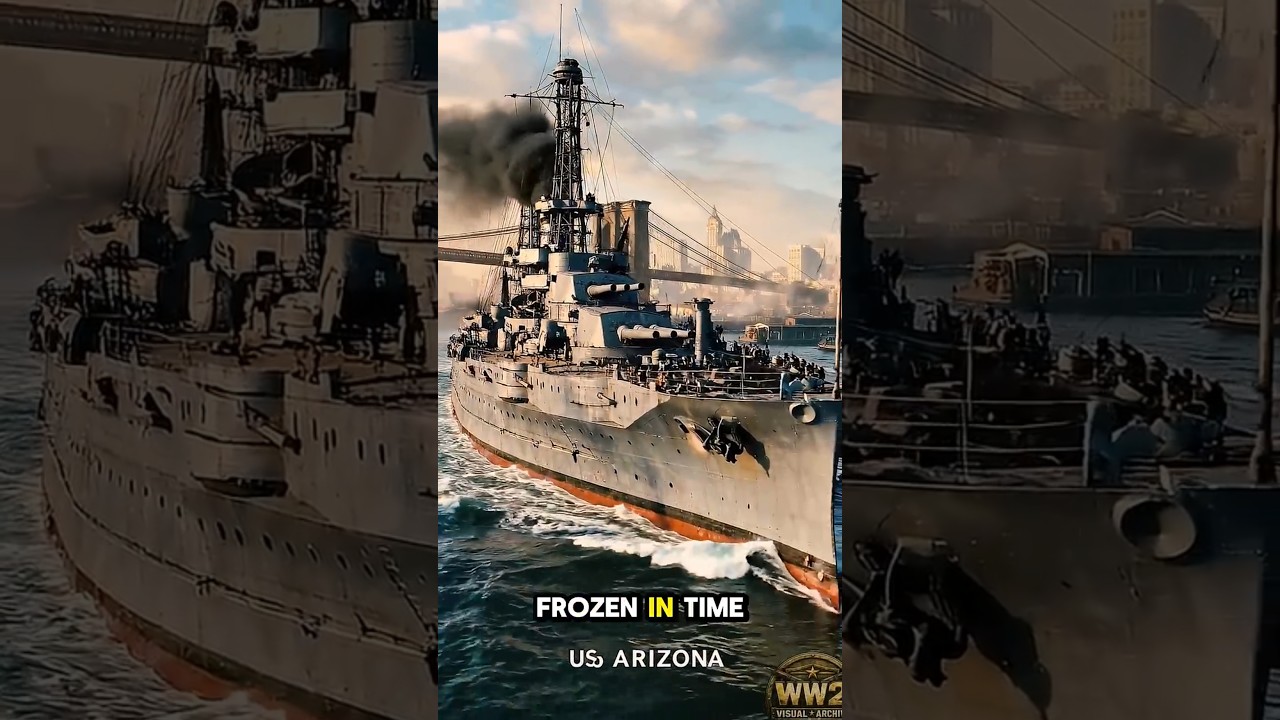
Keel laying took place at the New York Navy Yard in Brooklyn on 16 March 1914. Construction consumed over two years, requiring 31,400 tons of structural steel and armor plate. On 19 June 1915, she was christened with both champagne and a bottle of water from the Roosevelt Dam by Miss Esther Ross of Prescott, Arizona, before a crowd of 75,000 spectators. Commissioned on 17 October 1916 under Captain John D. McDonald, Arizona served as flagship of Battleship Division 8, patrolling the North American Atlantic seaboard during World War I and serving as part of the naval escort for President Woodrow Wilson aboard the liner SS George Washington en route to the Paris Peace Conference in December 1918.
The Comprehensive 1929–1931 Puget Sound Reconstruction
Under the limitations of the 1922 Washington Naval Treaty, capital ship construction was frozen. To maintain fleet competitiveness against modern foreign dreadnoughts, Arizona underwent a massive $16-million reconstruction at the Puget Sound Navy Yard between 1929 and 1931:
- Replacement of Cage Masts: Her spindly American-style “hyperboloid” wire-cage masts were cut away and replaced with robust three-legged structural tripod masts surmounted by heavy fire control spotting tops.
- Torpedo Protection Bulges: Large external anti-torpedo blisters (bulges) were riveted to the hull along both sides of the machinery spaces, expanding her beam from 97 feet (29.6m) to 106 feet 3 inches (32.39m)—the absolute maximum width capable of transiting the 110-foot locks of the Panama Canal.
- Propulsion Overhaul: Her original 12 coal-and-oil boilers were scrapped and replaced with six high-pressure Bureau Express three-drum water-tube boilers, paired with newly geared high-efficiency Parsons steam turbines delivering 33,375 shaft horsepower.
- Deck Armor & Anti-Aircraft Reinforcement: An additional 1.75 inches of Special Treatment Steel (STS) deck armor was laid over her machinery and magazine decks, while eight 5-inch/25 caliber dual-purpose anti-aircraft guns and two powder-catapults for OS2U Kingfisher observation floatplanes were installed.
The Human Dimension: Medals of Honor, Extraordinary Valor & The 37 Brother Crews
Beyond the architectural steel and ballistic metrics, the legacy of USS Arizona is defined by the profound courage and sacrifice of her 1,512 officers and crewmen. Amidst blinding smoke, raging oil fires, and catastrophic concussion, men demonstrated superhuman devotion to their shipmates and their nation.
Isaac Campbell Kidd
“Commander of Battleship Division One. Immediately upon the alarm, Admiral Kidd rushed to the bridge of his flagship and bravely discharged his duties as Senior Officer Present Afloat until the bridge was destroyed by a catastrophic direct hit.”
Franklin Van Valkenburgh
“Commanding Officer of USS Arizona. Gallantly maintained his post on the navigation bridge, refusing to abandon his ship and directing defensive fire and damage control operations until killed in the forward magazine explosion.”
Samuel Glenn Fuqua
“Damage Control Officer and first lieutenant. Knocked unconscious by the explosion, he recovered to calmly direct firefighting parties, establish casualty stations on the quarterdeck, and evacuate survivors to USS Vestal before leaving the ship.”
The 37 Sets of Brothers: A Heartbreaking National Record
In 1941, US Navy regulations permitted family members to serve aboard the same warship. Consequently, USS Arizona carried an astonishing 37 sets of brothers (79 men total)—including three brothers from the Murdock family of Kansas and the Free family of Austin, Texas. When the ship was destroyed, 62 brothers (23 sibling pairs) were killed together, while only a handful survived.
This concentrated family tragedy on Battleship Row, combined with the catastrophic loss of the five Sullivan brothers aboard the cruiser USS Juneau at Guadalcanal eleven months later, led the US military to enact the “Sole Survivor Policy” to prevent families from losing all their children in combat.
Declassified Logbook: Brooklyn Navy Yard to Battleship Row & The Memorial
Follow the 25-year service record of USS Arizona, from her 1916 commissioning and WWI presidential escort to her 1931 modernization and the fateful 08:06 explosion.
Commissioning of Super-Dreadnought BB-39 at New York Navy Yard
Under the command of Captain John D. McDonald, USS Arizona entered active naval service. Boasting twelve 14-inch guns in four triple turrets, she joined Battleship Division 8 as one of the most heavily gunned capital ships in the world.
Global Dreadnought & Fast Battleship Comparative Matrix
Benchmark USS Arizona against contemporary WWI-era dreadnoughts and the WWII fast battleships that fought the Pacific and Atlantic naval wars.
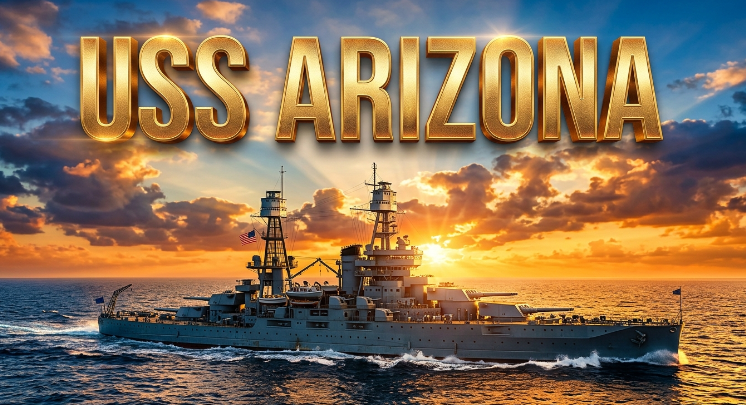
USS Arizona (BB-39) Battleship
Standard-type super-dreadnought featuring 12× 14-inch rifles in triple turrets, an all-or-nothing armor scheme, tripod fire control masts, and torpedo bulges.
Salvage Operations, Coastal Battery Arizona & The “Black Tears” Forensics
Immediately following the attack, Pearl Harbor Navy Yard divers descended into the fuel-soaked waters of Berth F-7. Working entirely by touch in zero visibility, navy divers recovered 105 bodies from the intact aft living spaces and retrieved classified cryptographic codebooks. While the pulverized forward hull was declared a complete loss, the Navy launched an extensive salvage program to reclaim Arizona’s heavy artillery.

Rebirth as Coastal Artillery: Battery Arizona & Battery Pennsylvania
In 1942, Navy salvage cranes dismantled Arizona’s aft superstructure and unbolted the six 14-inch rifles from Turrets III and IV. These massive naval guns were transferred to the US Army Coast Artillery Corps to fortify the Hawaiian Islands against future invasion:
- Battery Arizona (Kahe Point): Constructed in deep underground bomb-proof reinforced concrete tunnels on Oahu’s west coast, mounting Arizona’s salvaged Turret IV guns.
- Battery Pennsylvania (Mokapu Peninsula): Built on the eastern side of Oahu at Kaneohe Marine Corps Air Station, utilizing Arizona’s salvaged Turret III guns.
- The Final Salvo: Both coastal batteries were completed in 1945. On 14 August 1945 (V-J Day), Battery Pennsylvania test-fired her 14-inch guns for the first and only time—firing a thunderous ceremonial salvo that celebrated the surrender of Imperial Japan and the final vindication of USS Arizona.
The “Black Tears” of Pearl Harbor: Environmental & Corrosion Forensics
When Arizona sank, her lower fuel bunkers contained approximately 1.5 million gallons of thick Bunker C heavy fuel oil. An estimated 500,000 gallons remain trapped in the submerged double-bottom tanks. Every day, small rainbow-hued droplets of fuel seep through microscopic fissures in the corroding steel plates, rising to the harbor surface like perpetual tears.
Comprehensive metallurgical studies conducted by the National Park Service Submerged Resources Center and the US Geological Survey utilize ultrasonic thickness gauges and cathodic protection sensors to monitor the hull. Scientific findings confirm:
- Corrosion Rate: Steel oxidation in Pearl Harbor’s warm, brackish water is progressing at an exceptionally slow rate of 0.002 to 0.004 inches per year.
- Structural Lifespan: Finite element computer modeling indicates that the heavy armored hull will remain structurally sound and capable of safely containing its remaining oil for another 150 to 200 years.
- Seepage Volume: The active leakage rate averages between 2 and 9 quarts per day, which naturally dissipates without posing significant environmental hazard to marine wildlife.

The Alfred Preis Memorial Shrine & The Final Reunion
Dedicated on Memorial Day, 30 May 1962, the USS Arizona Memorial was designed by Austrian-born Honolulu architect Alfred Preis. The structure features a deliberate architectural contour: sagging gracefully in the center and rising proudly at both ends. Preis explained the philosophy: “The structure sags in the middle but stands strong and vigorous at the ends, expressing initial defeat and ultimate victory… The overall effect is one of serenity, overcoming the sensation of despair to encompass peace and honor.”
Since 1982, the United States Navy and the National Park Service have maintained a sacred military tradition: any veteran who was assigned to USS Arizona on 7 December 1941 and survived the attack may elect to have their cremated ashes interred inside the sunken battleship. In a solemn ceremony with full military honors, active-duty Navy divers carry the urn down into the harbor depths, placing it into the open barbette of Turret IV, reuniting the veteran with his fallen shipmates for all eternity.
Play “USS Arizona: Battleship Row — 7 December 1941 Anti-Air Defense”
Take command of USS Arizona’s 5-inch/25 cal anti-aircraft batteries and water-cooled .50 caliber machine gun nests. Defend Battleship Row against incoming waves of high-altitude Nakajima B5N2 “Kate” horizontal bombers and diving Aichi D3A1 “Val” dive-bombers before the fatal 800-kg bomb release.
USS Arizona Technical & Historical Qualification Quiz
Test your knowledge of the battleship’s architectural specifications, the modified Nagato bomb forensics, the salvage operations, and the Pearl Harbor Memorial.
Explore Connected Capital Warships, Superguns & Advanced Weapons
Discover our comprehensive interactive archives covering capital warships, super-heavy siege artillery, seismic earthquake ordnance, and naval anti-aircraft weapons.
Schwerer Gustav 80cm Railway Gun
The largest rifled artillery weapon ever built: 1,350-ton siege titan that fired 7-ton shells at the Siege of Sevastopol in 1942.
German Battleship Bismarck
Detailed operational breakdown of the legendary 50,000-ton dreadnought, her Rheinübung sortie, and torpedo steering damage.
HMS Hood Battlecruiser
Comprehensive architectural study of the Mighty Hood, Denmark Strait engagement, and catastrophic magazine explosion.
Battleship Yamato 4K Restoration
4K multi-spectral restoration of the world’s largest 72,800-ton battleship, featuring 46cm main batteries and Operation Ten-Go.
USS Iowa-Class Fast Battleships
Engineering analysis of the 33-knot Iowa class, 16-inch Mark 7 guns, advanced radar fire control, and Pacific carrier escorts.
German U-Boats of WWII
Type VII and Type IX submarine doctrine, Wolfpack tactics in the North Atlantic, and the technological battle against Allied convoy radar.
Bofors 40mm Anti-Aircraft Gun
The iconic automatic cannon that defended Allied warships against Axis dive bombers and kamikaze attacks across every theater.
German 15mm Drilling Triple MG
High-rate triple autocannon mounting utilized for low-altitude airfield defense and mechanized anti-aircraft protection.
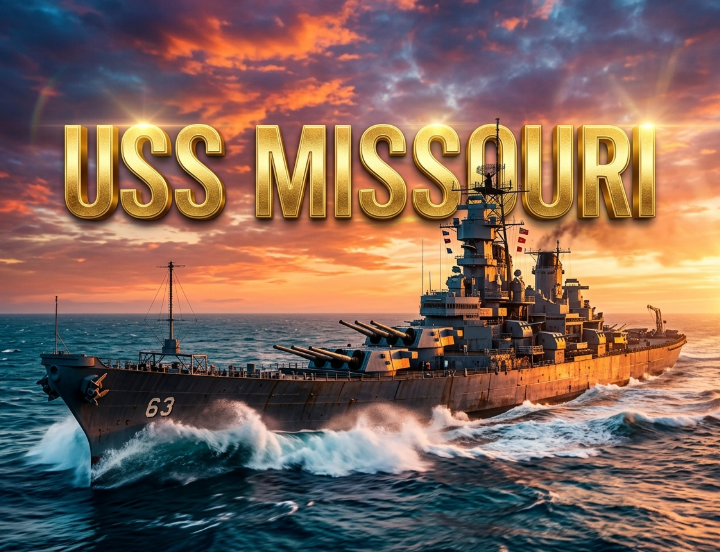
USS Missouri (BB-63) Battleship
The surrender battleship: carrier strike force defense, Okinawa shore bombardment, and the Tokyo Bay signing ceremony in September 1945.
Tallboy 12,000 lb Seismic Bomb
Barnes Wallis’s deep-penetration earthquake weapon that shattered reinforced U-boat pens, V-weapon bunkers, and the battleship Tirpitz.
Japanese Imperial Naval AA Guns
Type 96 25mm triple mounts and 12.7cm dual-purpose guns deployed across Imperial Japanese Navy super-dreadnoughts and carriers.
German Flak Artillery Systems
The deadly 8.8cm Flak 18/36/37 and 12.8cm Flakzwilling towers that guarded the skies over Berlin, Hamburg, and the Ruhr industrial core.
IJN I-400 Submarine Aircraft Carrier
The Sen-Toku submarine titan carrying three folding-wing M6A1 Seiran strike bombers designed to strike the Panama Canal.
Primary Archival Resources & Naval Architecture Bibliography
This technical and memorial reference dossier was constructed from original US Navy Bureau of Ships engineering blueprints, National Park Service underwater archaeology reports, and declassified Pearl Harbor Court of Inquiry transcripts:
- US Navy Bureau of Ships: USS Arizona (BB-39) Booklet of General Plans (Washington, D.C.: Navy Department, 1931 Modernized Edition). Declassified engineering lines, compartment subdivisions, armor thickness diagrams, and magazine handling specifications.
- National Park Service Submerged Resources Center: Submerged Cultural Resources Study: USS Arizona Memorial and Pearl Harbor National Historic Landmark, edited by Daniel J. Lenihan (Santa Fe: National Park Service, 1989). Comprehensive underwater structural mapping, hull corrosion measurements, and fuel bunker oil containment assessments.
- Pearl Harbor Court of Inquiry: Record of Proceedings of the Court of Inquiry Convened by Order of the Secretary of the Navy (Washington: US Government Printing Office, 1944). Eyewitness testimony from surviving crew members, officers of USS Vestal, and medical teams.
- Stillwell, Paul: Battleship Arizona: An Illustrated History (Annapolis: Naval Institute Press, 1991). The definitive chronological reference on BB-39’s design, operational career, crew life, and loss.
- Prange, Gordon W., Donald M. Goldstein, and Katherine V. Dillon: At Dawn We Slept: The Untold Story of Pearl Harbor (New York: McGraw-Hill, 1981). Archival reconstruction of Imperial Japanese Navy ordnance development and pilot flight logs.
- Friedman, Norman: U.S. Battleships: An Illustrated Design History (Annapolis: Naval Institute Press, 1985). Technical evolution of the Standard-type battleship concept and armored deck development.